



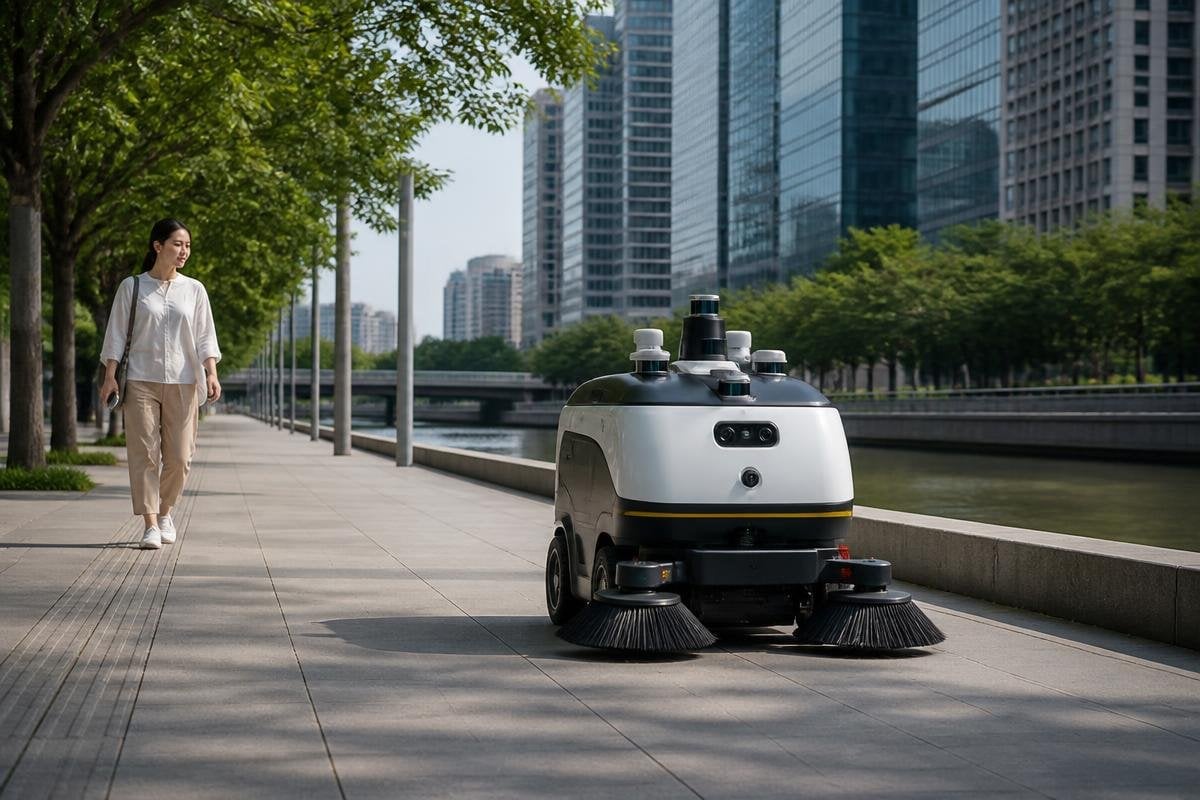
City robots have to share roads, pavements, buildings, and public space with people. Its first test is practical: can it do one useful task safely, at a cost the city can carry?
Quick read
- Start with one repeatable task, such as site inspection or floor cleaning.
- Keep a person responsible for remote help and emergency stops.
- Measure completed work, delays, battery use, and public complaints.
Where city robots can help
Robots fit city work when the task is dull, repeated, or risky for a person. A ground robot may inspect a drainage channel, carry items across a large site, or clean a public building after hours.
A drone may check a bridge, roof, or power line where a close human inspection would take more time and safety equipment.
The useful part is the repeatable route and the clear handoff. A robot can collect images, location data, or readings, then send them to a control room. A worker still decides what needs repair, how urgent it is, and whether the area should close.
That division matters. A robot can cover the same path many times, but it may struggle with a blocked route, poor lighting, loose objects, or a person who stops in front of it. The city needs a plan for those cases before the machine starts work.
The city is part of the robot
A robot built for a warehouse gets marked routes, controlled access, and known floors. A public street has changing weather, roadworks, parked vehicles, pets, children, and people using mobility aids. Those conditions affect sensors, speed, braking distance, and the quality of the data collected.
Connectivity adds another limit. If a robot sends video over a wireless link, the operator needs a safe response when that link drops. The robot might stop, return to a known point, or wait for help. The choice depends on the task, the location, and the risk around it.
Power also shapes the work plan. A machine that needs frequent charging may spend too much time away from its task. The city team has to count charging, cleaning, software updates, storage, and repairs alongside the purchase price.
Robot24.com is a robotics news platform, so its coverage of city machines matters when you need to compare public claims with the hardware, trials, and limits reported around them.
People, rules, and public space
Robots record data in places where people live and work. Cameras and microphones can collect personal information even when that isn’t the main purpose of the job. The project should state what the robot records, how long the data stays, who can view it, and when the system deletes it.
Public notice matters too. People need to know what the robot does and how to report a problem. A visible label, a clear route policy, and a staffed contact point give residents a way to ask questions without stopping the machine in the street.
The safest projects keep a person in charge of exceptions. That person may take control, stop the robot, or send a worker to the site. Full autonomy sounds neat on a diagram, but city work happens around people who didn’t agree to join a test.
I’d judge a city robot by its response to an ordinary problem, not its smoothest demonstration.
A practical buying checklist
Before a city team approves a pilot, check these points:
- Name the task: Write down the route, object, or inspection result the robot must handle.
- Set the handoff: Decide who receives alerts and how quickly they must respond.
- Test blocked routes: Use parked objects, people, poor lighting, and a lost network connection.
- Count the full cost: Add charging, storage, repairs, staff time, data handling, and insurance.
- Set a stop rule: Choose the failure rate, safety event, or public complaint level that ends the trial.
A small pilot should answer a narrow question. Can the robot finish the task with fewer delays, lower risk, or less staff time than the current method? If the answer is unclear after the trial, the city has learned that the task needs better planning before it needs more robots.
The next useful step is a measured pilot on one route or site, with its success rule written down before the robot arrives.
