



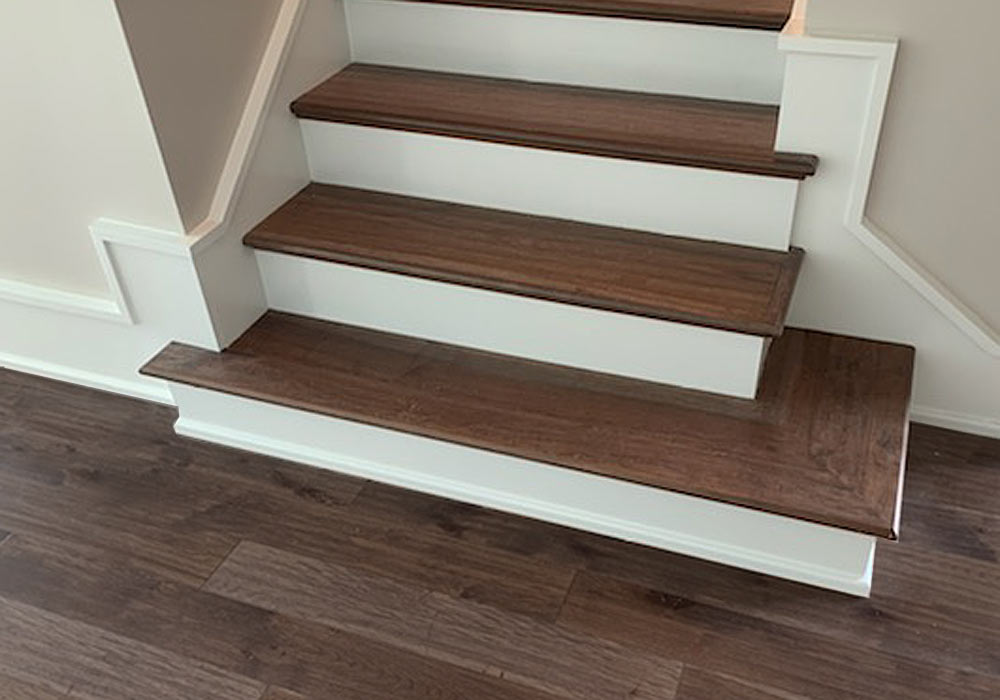
A staircase often connects several visible areas of a home, so even a minor mismatch can interrupt the visual flow between floors. Selecting the right stair treads requires more than finding a stain color that appears close in a photograph. Flooring dealers, contractors, builders, and designers must consider wood species, grain, undertones, finish, construction, and surrounding materials before approving an order.
Begin With the Dominant Flooring
Start by identifying the flooring that has the strongest visual relationship with the staircase. This is usually the floor at the bottom of the stairs, although open floor plans may require consideration of both levels.
Matching every nearby wood surface is not always possible. A home may contain hardwood flooring on the first floor, engineered flooring upstairs, painted trim, and several furniture finishes. Rather than forcing an exact match across all these elements, choose the floor that should guide the staircase design.
When the existing flooring is in good condition and will remain in place, use it as the primary reference for the tread species and color. If the flooring is also being replaced, select the floor and stair materials together.
Compare Wood Species Before Stain Colors
Two woods treated with the same stain can produce noticeably different results. Grain pattern, density, porosity, and natural undertones all influence the final appearance.
Red oak commonly shows a pronounced grain and warm pink or reddish undertones. White oak usually has a straighter grain with tan or brown undertones. Maple has a smoother appearance but may absorb stain less evenly. Hickory presents stronger color variation and a more rustic character.
Whenever possible, use the same wood species for the flooring and staircase. If an exact species match is unavailable, compare woods with similar grain movement and undertones. A close color match will be less convincing when the grain patterns look unrelated.
Allow for Natural Variation
Hardwood is a natural material, so no two boards will look exactly alike. Flooring may also change color as it ages and is exposed to sunlight. A sample taken from a protected closet can look different from boards installed near a window.
Set realistic expectations with property owners before ordering. The goal is usually visual coordination rather than identical coloring across every board. Slight variation can make the staircase look natural, while an overly uniform finish may appear artificial beside an existing hardwood floor.
Samples should be reviewed in the actual project environment. Daylight, artificial lighting, wall colors, and nearby finishes can all affect how a stain is perceived.
Select the Correct Tread Construction
The staircase structure determines which type of tread is appropriate. Traditional treads are generally used when the existing stair components are being removed or when the staircase is being built from the framing stage.
Retrofit treads are designed to cover properly prepared existing steps. They can be useful during remodeling projects because they reduce the need to rebuild the entire staircase. However, the installer must account for tread thickness, nosing dimensions, riser height, and applicable building requirements.
Open-sided stairs may also require return treads. A return provides a finished edge where the side of the tread is visible. The return direction must be confirmed from the viewpoint used by the supplier, since ordering the wrong side can delay installation.
Decide Between Prefinished and Unfinished Treads
Prefinished stair treads arrive with the color and protective coating already applied. They can reduce on-site sanding, staining, drying time, odor, and dust. They also provide greater finish consistency across the order.
Unfinished treads offer more control when the installer needs to develop a custom stain on site. This may be helpful when matching older flooring, unusual colors, or another finish being applied during the same project.
The decision should account for the project schedule, site conditions, customer expectations, and the availability of a reliable finisher. Prefinished products are often a practical choice when predictable appearance and faster installation are priorities.
Coordinate the Complete Staircase
Treads should not be selected in isolation. Risers, landing materials, nosing, handrails, newel posts, balusters, and wall trim all contribute to the completed design.
A staircase can match the hardwood floor directly, or it can use controlled contrast. For example, wood treads paired with painted risers can connect the stairs to both the flooring and the interior trim. A handrail in a related wood tone can then carry the material upward without making every component identical.
The most successful combinations look intentional. Unplanned differences in tone or sheen are more noticeable than a clearly defined contrast.
Confirm the Selection With Physical Samples
Digital images are useful for narrowing choices, but they should not be the final basis for approval. Screens display colors differently, and product photography cannot fully represent grain, texture, sheen, or natural variation.
Request physical samples and compare them with the installed flooring under daytime and evening lighting. If possible, evaluate several flooring boards rather than a single section. Record the approved species, stain, finish, tread profile, dimensions, and return direction before placing the full order.
Careful material selection prevents avoidable reorders and gives installers a clearer standard for the completed staircase. For prefinished hardwood stair components, species choices, and project guidance, visit Wood Stair Co and start planning a staircase that works with the surrounding flooring.
