



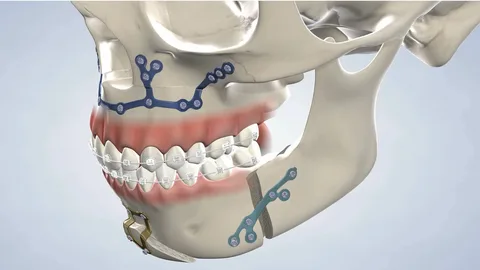
When people think about jaw surgery, they often focus on the procedure itself. But in reality, the success of any jaw-related treatment depends far more on what happens before surgery than during it. Planning is the most critical phase—where diagnosis, structure, and long-term function are carefully mapped out.
Modern approaches to jaw correction rely on detailed analysis and precision planning to ensure that results are not only effective, but stable over time. This article breaks down how that process works and why it matters.
Step 1: Understanding the Root Problem
Every jaw condition is different. Two patients may have similar symptoms—such as jaw pain or bite issues—but completely different underlying causes.
The first step is identifying whether the issue is:
- structural (jaw position or bone alignment)
- joint-related (TMJ dysfunction or degeneration)
- muscular (tension or overuse)
- airway-related (breathing restrictions)
Without this clarity, treatment may only address symptoms rather than solving the actual problem.
Step 2: Detailed Structural Analysis
Once the cause is understood, the next step is analyzing the facial structure in detail. This goes far beyond a simple dental check.
Specialists typically evaluate:
- how the upper and lower jaws align
- facial symmetry and proportions
- the relationship between teeth and jaw position
- how the jaw moves during opening and closing
Even small misalignments can create significant functional problems, so precision at this stage is essential.
Step 3: Evaluating the TMJ (Jaw Joint)
The temporomandibular joint plays a major role in determining jaw stability. If the joint is unstable or damaged, simply repositioning the jaw may not lead to long-term success.
That’s why planning often includes:
- assessing joint health and disc position
- identifying signs of degeneration
- evaluating how the joint affects jaw movement
In complex cases, joint treatment and jaw repositioning may need to be addressed together.
Step 4: Bite and Function Mapping
The bite is not just about how teeth meet—it’s about how forces are distributed across the entire jaw system.
During planning, specialists analyze:
- contact points between teeth
- pressure distribution during chewing
- how the bite affects muscle activity
A stable bite ensures that the jaw, joints, and muscles work together without strain after treatment.
Step 5: Airway Considerations
In recent years, airway evaluation has become an important part of jaw treatment planning.
Jaw position can influence:
- tongue space
- airway size
- breathing during sleep
For patients with breathing-related concerns, treatment planning may include adjustments that improve airway function alongside jaw alignment.
Step 6: Digital Simulation and 3D Planning
One of the biggest advancements in modern Jaw Surgery is the use of digital technology.
Using 3D imaging and simulation tools, surgeons can:
- visualize the current facial structure
- simulate different surgical outcomes
- predict how changes will affect function and appearance
- plan precise movements of the jaw
This level of detail reduces uncertainty and improves the accuracy of the procedure.
Step 7: Creating a Long-Term Stability Plan
The goal of jaw surgery is not just immediate correction—it’s long-term stability.
Planning focuses on:
- ensuring joints can support the new position
- creating a balanced bite that won’t shift
- reducing the risk of relapse
- maintaining proper muscle function
This is what separates temporary improvement from lasting results.
Why Planning Matters More Than the Procedure
While surgical skill is important, the outcome is largely determined by how well the case is planned.
Poor planning can lead to:
- bite instability
- joint problems after surgery
- relapse over time
- continued discomfort
On the other hand, precise planning allows for predictable, stable outcomes that improve both function and quality of life.
Final Thoughts
Jaw surgery is not a one-size-fits-all solution. It is a highly customized process that depends on accurate diagnosis and detailed planning. From structural analysis to joint evaluation and digital simulation, every step is designed to create a balanced, functional result.
Understanding this process helps patients see that successful outcomes don’t happen by chance—they are carefully engineered long before the procedure begins.
