



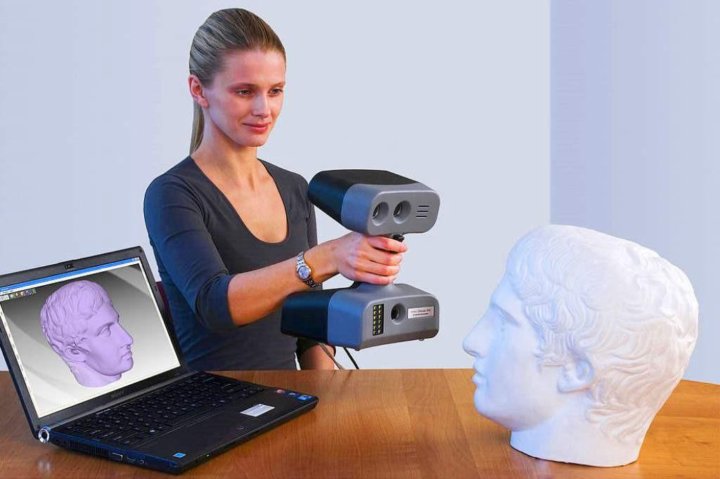
The preservation of historical artifacts has long been a critical concern for archaeologists, historians, and conservationists alike. As technology advances, new methods for safeguarding these irreplaceable objects have emerged, with 3d scanning standing out as one of the most revolutionary techniques. The role of 3D scanning in preserving historical artifacts is increasingly recognized as invaluable, offering a non-invasive and highly accurate way to document and conserve cultural heritage.
What is 3D Scanning?
3D scanning involves the use of laser or light-based technology to capture the precise physical dimensions of an object. This data is then used to create a digital 3D model that can be analyzed, reproduced, or stored without the need for physical handling. For historical artifacts, this technology allows experts to create exact replicas of ancient objects, providing a way to study and share these items without risking damage to the originals.
Key Benefits of 3D Scanning for Artifact Preservation
1. Non-Invasive Documentation
Traditional methods of preserving artifacts often involve physical restoration, which can sometimes damage the object. 3D scanning, however, offers a non-invasive alternative. By digitally recording every detail of an artifact, including textures, shapes, and surface features, historians and conservators can create a permanent, accurate record without touching or altering the original piece. This is especially crucial for fragile items, such as pottery, manuscripts, or sculptures, that might degrade over time or be vulnerable to mishandling.
2. Creating Digital Archives
Once scanned, historical artifacts can be stored in digital form, allowing for easier sharing and study across the globe. Researchers can access these 3D models remotely, enabling collaborative work that might otherwise be hindered by geographical limitations. Moreover, digital archives ensure that the data is preserved for future generations, even if the physical artifact is lost or deteriorates over time.
3. Virtual Restoration
Sometimes artifacts suffer from damage that makes them incomplete or fragmented. 3D scanning can be used not only to document these artifacts but also to create virtual reconstructions. Experts can digitally “restore” missing pieces by filling in gaps with 3D models, providing a view of how the object might have appeared in its original form. This process aids in understanding the artifact’s history, use, and significance.
Applications of 3D Scanning in Artifact Preservation
1. Museums and Cultural Institutions
Museums around the world are increasingly utilizing 3D scanning to preserve their collections. These models allow visitors to interact with artifacts in new ways, such as through virtual reality (VR) or interactive displays. Moreover, they ensure that even if the physical artifact becomes damaged or destroyed, the digital version can continue to serve educational and research purposes.
2. Archaeological Excavations
When archaeologists unearth new sites, the objects they find can be delicate and subject to environmental threats. 3D scanning provides a quick and precise way to document these items before they are moved or further exposed to the elements. This is particularly important in underwater archaeology or in remote locations, where immediate preservation methods may be limited.
3. Restoration Projects
In cases where physical restoration is necessary, 3D scanning can provide invaluable data to guide conservators. The digital model can help track the progress of restoration, ensure that repairs are made with high accuracy, and allow for simulations of different restoration methods before any physical work is done.
The Future of 3D Scanning in Historical Preservation
The role of 3D scanning in preserving historical artifacts is only expected to grow as the technology continues to improve. Advances in scanning resolution, speed, and software are making it easier to capture even the most intricate details of an artifact. Moreover, the rise of augmented reality (AR) and virtual reality (VR) technologies could allow for even more immersive experiences, allowing people to “walk through” ancient civilizations or study artifacts in 3D, from all angles, without leaving their homes.
Enhancing Public Engagement
3D scanning also opens up new possibilities for public engagement with cultural heritage. By making high-quality, interactive 3D models available online, institutions can reach a global audience, offering educational experiences that were once limited to physical museum visits. This democratization of access ensures that more people can appreciate and learn from historical artifacts, regardless of their location.
Ongoing Research and Development
As more historical artifacts are digitized, the field of 3D scanning for preservation will continue to evolve. Researchers are experimenting with ways to enhance the texture and color accuracy of scans, develop better materials for 3D printing replicas, and create more efficient scanning methods that could be used in fieldwork.
Conclusion
The role of 3D scanning in preserving historical artifacts is transforming the way we understand and protect our cultural heritage. By providing a non-invasive, accurate method for documenting, restoring, and sharing artifacts, this technology ensures that valuable pieces of history are protected for future generations. As the technology continues to advance, its potential to revolutionize the fields of archaeology, conservation, and museum studies is immense, making it an essential tool in the preservation of our shared past.
