



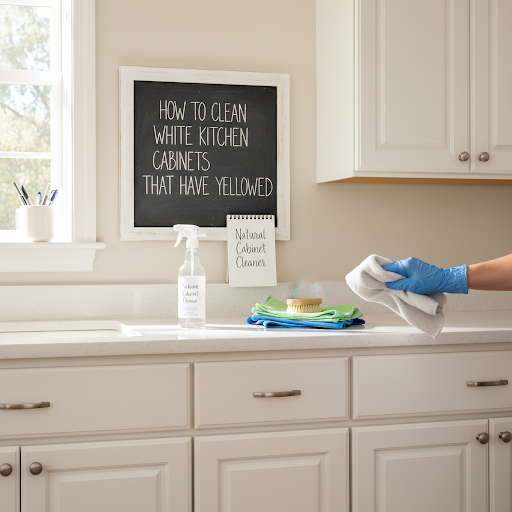
There is something undeniably crisp and clean about a white kitchen. It feels bright, airy, and timeless. But after a few years, you might notice something shifting. That brilliant white finish starts to look a little dingy.
It starts subtly—maybe near the stove or the handles—until one day you realize your beautiful cabinets have turned a sickly shade of yellow.
It’s frustrating. You clean your kitchen regularly, yet the discoloration persists. You might worry you need to repaint everything or, worse, replace them.
Don’t panic. You can restore that original brightness without a complete renovation. We’re going to walk through exactly how to clean white kitchen cabinets that have yellowed using simple, effective methods.
Why White Kitchen Cabinets Turn Yellow Over Time
Before we start scrubbing, it helps to understand the enemy. Why does this happen? It’s usually not because you are dirty or messy. It is chemistry. Read article on How to Paint Kitchen Cabinets
Grease and Cooking Residue
This is the most common culprit. Every time you cook, microscopic particles of grease (lubricant) float into the air. Even with a good kitchen hood or ventilation (architecture), this airborne grease eventually settles on surfaces. Read article on Best Kitchen Storage Cabinets.
Over time, layers of grease build up. Dust and dirt stick to the grease, creating a sticky, yellow film. This is why cabinets above the stove usually look the worst. Neatcupkit has items for Storage on Top of Kitchen Cabinets
Sunlight Exposure
Direct sunlight is beautiful, but it can be harsh on paint and lamination. Ultraviolet (UV) rays can cause a chemical reaction in the finish of your cabinets, leading to permanent discoloration. If the yellowing is only on the cabinets near a window, the sun is likely to blame.
Moisture and Humidity
Kitchens are wet places. Steam from boiling water or the dishwasher creates humidity. Over time, moisture can penetrate the top layer of the cabinet finish, causing the wood or the paint to oxidize and turn yellow.
The Paint Type
Oil-based paints are notorious for yellowing as they age, especially in areas with low light. Water-based paints generally hold their color better but aren’t immune to grease buildup.
How to Clean Yellowed White Kitchen Cabinets (Step-by-Step)
Ready to get to work? We are going to start with the gentlest method and work our way up to tougher solutions.
Safety First: Always test any cleaning solution on a small, hidden spot (like the inside of a door) first to ensure it doesn’t damage the finish. Read article on Small Kitchen Storage Cabinet Organizers
Method 1: The Vinegar and Water Solution
For light yellowing and general maintenance, plain old vinegar is a powerhouse. It cuts through grease without damaging most finishes.
What you need:
- White vinegar
- Warm water
- Spray bottle
- Soft cloth or sponge
- Dry towel
Steps:
- Mix: Combine one cup of white vinegar with one cup of warm water in a spray bottle.
- Spray: Mist the solution onto the yellowed cabinet cleaning area. Don’t soak it; just dampen it.
- Sit: Let it sit for 3-5 minutes. This gives the acid time to break down the grease.
- Wipe: Gently wipe away the grime with a soft cloth.
- Dry: Immediately dry the surface with a clean towel to prevent moisture damage.
Method 2: The Baking Soda Paste (For Stubborn Grease)
If you are wondering how to clean kitchen cabinets with baking soda and vinegar, this is the deep-cleaning version. Sodium bicarbonate (baking soda) acts as a gentle abrasive.
What you need:
- Baking soda
- Water (or vinegar for extra power)
- Soft brush (an old toothbrush works great)
- Damp cloth
Steps:
- Paste: Mix baking soda with a little bit of water or vinegar until it forms a runny paste.
- Apply: Dip your brush into the paste and apply it to the yellow spots.
- Scrub: Gently scrub in a circular motion. Focus on sticky areas.
- Wait: Let the paste sit for a few minutes.
- Rinse: Wipe clean with a damp cloth. You might need to rinse the cloth a few times to get all the grit off.
- Dry: Dry thoroughly with a soft towel.
Method 3: Dish Soap and Warm Water
Sometimes, simple is best. A good grease-fighting dishwashing liquid is designed to break down oil, making it perfect for normal design kitchen cabinets coated in cooking residue.
Steps:
- Mix: Fill a bowl with warm water and add a squirt of degreasing dish soap.
- Wash: Dip a sponge into the sudsy water (wring it out so it’s not dripping) and wipe down the cabinets.
- Clean: Follow up with a cloth dampened with just clear water to remove soap residue.
- Dry: Dry completely.
Method 4: The “Magic” Eraser
Melamine foam sponges (often called Magic Erasers) can be effective, but use caution. They are essentially very fine sandpaper.
Steps:
- Wet: Wet the sponge and squeeze it out.
- Test: Scrub a hidden spot gently.
- Rub: Lightly rub the yellow stains. Do not scrub hard, or you risk taking the finish off the paint.
- Wipe: Wipe away any residue.
Best Cleaning Solutions: Natural vs. Commercial Products
When figuring out how to clean white kitchen cabinets that have yellowed, you have a choice between pantry staples and store-bought chemicals.
Natural Cleaning Solutions
I love natural options because they are safe for your family and pets.
- Vinegar: Cheap, accessible, and excellent at cutting grease.
- Baking Soda: Great for scrubbing without scratching.
- Lemon Juice: Natural bleaching properties (use sparingly).
These work wonderfully for surface grease and general cabinet discoloration removal. If you want to know how to clean white kitchen cabinets that have yellowed naturally, these are your best bets.
Commercial Cleaners
Sometimes, natural stuff just doesn’t cut it.
- Wood Cabinet Cleaners: Products like Murphy’s Oil Soap are formulated for wood but work on painted surfaces too.
- All-Purpose Degreasers: Look for cleaners specifically labeled for kitchen grease.
- TSP (Trisodium Phosphate): This is a heavy-duty cleaner often used before painting. It creates a chemical reaction (redox) that strips grease deeply. Use gloves and protective gear if you go this route.
A note on WD-40: You might ask, does WD 40 remove grease from kitchen cabinets? Yes, the petroleum in it dissolves grease. However, it can leave its own oily residue that attracts more dirt later. Use it as a last resort and clean thoroughly afterward.
How to Prevent Yellowing in the Future
Once you have put in the hard work to clean your normal kitchen cabinets, you want them to stay white. Here is how to keep them bright.
Use Your Exhaust Fan
Turn on your kitchen hood or ventilation every time you cook. This pulls airborne grease and smoke out of the room before it can settle on your cabinets.
Clean Regularly
Don’t wait until you see yellow. Wipe down your cabinets once a week with a mild soap solution. Regular kitchen hygiene prevents buildup.
Protect from Sunlight
If strong sunlight hits your cabinets, consider installing blinds or UV-blocking window film. This prevents the chemical change in the paint pigment caused by UV rays.
Watch the Heat
Be careful with appliances. Don’t place a toaster oven or coffee maker directly under a cabinet where steam and heat will constantly hit the finish.
Conclusion
Seeing your bright white kitchen turn yellow feels defeating, but it is rarely permanent. With a little elbow grease and the right chemistry, you can lift layers of grime and reveal the clean surface underneath.
Whether you choose a gentle vinegar soak or a scrub with baking soda, the key is patience. Take your time, work in sections, and always dry your cabinets thoroughly.
Your kitchen is the heart of your home. A little maintenance keeps it beating strong and looking beautiful. So, grab a sponge, put on some grime music (or whatever you like to clean to), and let’s get those normal kitchen cabinets shining again.
FAQs
What’s the best cleaner for yellowed white cabinets?
For most homes, a paste of baking soda and water (or vinegar) is the most effective. It is abrasive enough to scrub away sticky grease but gentle enough not to ruin the paint.
Can I use bleach to whiten my cabinets?
It is risky. Bleach can damage the finish of the wood or paint, leading to peeling. If you must use it, dilute it heavily (one tablespoon per quart of water) and test a hidden spot first.
How often should I clean white kitchen cabinets?
Spot clean spills immediately. Do a general wipe-down once a week. Do a deep clean (degreasing) every 3 to 6 months to prevent permanent yellowing.
Does sunlight cause yellowing on kitchen cabinets?
Yes. UV rays can alter the chemical structure of the paint or finish, turning it yellow. This is harder to fix than grease stains and may require repainting.
Will painting over yellowed cabinets fix the discoloration?
Yes, but you must clean them first! If you paint over grease, the new paint won’t stick. You need to strip the grease, sand the surface, apply a stain-blocking primer, and then paint.
