



In recent years, drones have revolutionized the fields of surveying, construction, agriculture, and environmental monitoring. However, the accuracy of drone-collected data can vary significantly depending on the technology used. One key advancement that has dramatically improved drone mapping and aerial surveys is rtk gps.
What is RTK GPS?
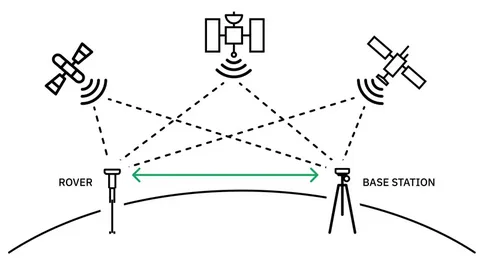
RTK, or Real-Time Kinematic, GPS is a satellite navigation technique that provides centimeter-level accuracy by correcting GPS signals in real time. Unlike standard GPS, which can have an error margin of several meters, RTK GPS uses a base station and a rover (the drone) to synchronize positional data with high precision. This technology is crucial for applications where exact measurements are necessary.
Benefits of RTK GPS in Drone Mapping
1. Enhanced Accuracy
The most significant advantage of using RTK GPS in drone mapping and aerial surveys is its accuracy. Surveyors can now obtain precise coordinates of the terrain, structures, or crops without the need for extensive ground control points (GCPs). This not only saves time but also reduces operational costs.
2. Improved Efficiency
With RTK GPS, drones can complete mapping missions faster. Since there is less need to place and measure GCPs manually, survey teams can cover larger areas in less time. This makes RTK-enabled drones especially valuable for large-scale projects such as mining operations or agricultural land analysis.
3. Seamless Data Integration
RTK GPS ensures that the data collected during drone flights aligns perfectly with existing maps, CAD files, or GIS datasets. This seamless integration allows engineers, architects, and planners to make more informed decisions based on highly accurate spatial data.
Applications of RTK GPS in Aerial Surveys
Construction and Infrastructure
Engineers can monitor construction sites with precision, track progress, and identify deviations from design plans, all thanks to RTK GPS-enhanced drone surveys.
Agriculture
Farmers can use RTK-enabled drones for precision agriculture, mapping crop health, irrigation needs, and soil conditions with centimeter-level accuracy.
Environmental Monitoring
RTK GPS improves the accuracy of topographic surveys, coastline mapping, and forest monitoring, allowing scientists to track changes over time with confidence.
Conclusion
How RTK GPS enhances drone mapping and aerial surveys is clear: it provides unmatched accuracy, efficiency, and data reliability. By integrating RTK GPS technology into drones, industries ranging from construction to agriculture can achieve faster project timelines, lower costs, and better-informed decision-making. As drone technology continues to advance, RTK GPS will remain a cornerstone of high-precision aerial surveying.
