



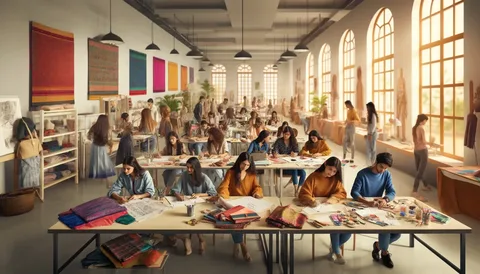
You may discover a whole range of employment opportunities with a study in fashion designing. various students may think they would become a fashion designer, however there are various creative and commercial opportunities in the business.
Fashion designers may create garment collections for numerous categories such as womenswear, menswear, childrenswear, event wear, activewear or specialized clothes. Some designers work for existing brands, others ultimately start independent labels.
This fashion designing course in Jaipur technique makes pupils realize that fashion is more than simply particular pieces of clothing. A collection is a full visual tale that brings together research, design, fabrics, construction, style and presentation.
Developing Digital and Professional Fashion Skills
Technology continues to change the fashion business and current fashion education is using more and more digital resources in addition to conventional methodologies. Students may use digital skills to share ideas, test out designs and display their work professionally.
Digital fashion illustration tools may be used to produce sketches, explore color combinations, create technical drawings and improve design ideas. Students also learn how electronic devices enhance traditional hand-drawn approaches, not replace them.
Technology may be quite beneficial in creating patterns, prints, presentations and portfolios. Digital platforms enable designers to experiment fast and produce professional looking visual content to share with prospective jobs, clients or colleagues.
Fashion education may also provide students an understanding of the commercial side of the industry. A designer has to grasp that the fashion is a part of a bigger commercial system of production, retail, marketing, merchandising, consumer research and communication.
Part of this approach is understanding the target consumer. A designer has to evaluate who will wear a garment, what they value, how they buy, what kind of apparel fits their lifestyle. Creative choices work best when they are made with an awareness of the audience they are meant for.
Another key professional skill is portfolio building. A portfolio may be a great way to display a student’s creative thought, research process, drawing skills, technical knowledge, final garments and overall design identity. Learning how to organize and display this work might be useful for applications for internships, employment or additional chances. Progressively, systematic learning allows students to develop creative ideas into drawings, samples, garments, collections and professional portfolios.
Building a Strong Base in Fashion Design
A good fashion collection is based on a good knowledge of the basics of design. But before students can successfully make complicated clothes, they need to understand how visual pieces go together. Concepts like proportion, balance, harmony, contrast, rhythm, color, texture and silhouette establish the basis in courses of fashion designing.
“Fashion illustration is a big part of that learning process. Sketching helps designers to express their ideas before they are physically built. Students learn to draw the human body, learn proportions, learn to sketch clothing well, acquire visual language to express design.
A fashion drawing has to be more than pretty. The necklines, sleeves, collars, pockets, pleats, seams, hemlines, surface embellishment need to be well shown. This contributes to connecting creative conception to technological implementation.
Color theory is another important field. Designers need to be aware of how various tones work within a palette and how color may affect the mood of a collection. Students may play with color combinations, contrasts, tonal palettes, seasonal orientations and color connections with various textiles.
They may also learn how to communicate and collaborate effectively which is beneficial to fashion students. The industry is about dealing with photographers, models, stylists, manufacturers, textile experts, merchandisers and other people.
Fashion styling is another creative outlet. A stylist works with clothes, accessories, colors and visual ideas to create looks used in photography, advertising, editorial projects, events, media and other platforms. A good knowledge of fashion and visual composition is useful in this sector.
Textile design is an option for students who like dealing with colors, patterns, surfaces and materials. Textile workers are able to create prints, patterns, embroideries and other surface treatments for clothes and associated items.
Fashion illustration is an opportunity for those who appreciate sketching and visual communication. Illustrators may generate work for portfolios, editorial, commercial, fashion shows and creative projects.
Merchandising is a combination of fashion expertise and insight into business and consumers. Fashion merchandisers are involved in product selection, market trends, inventory, store display, consumer behavior and sales methods.
Another rising sector is Fashion Communication, especially as internet media gain importance. Professionals may work in fashion writing, photography, social media, visual presentation, public relations or digital marketing.
Entrepreneurship is also an option for graduates wishing to build their own fashion companies. Understanding design, manufacturing, price, marketing and customer preferences may be a good basis for beginning an independent firm.
The breadth of choices means students may explore numerous fields before choosing where they wish to specialize. A good foundation in design may still be valuable, even if a graduate ends up moving into a related sector.
From The Classroom To The Catwalk
As we get from drawings to runways, we are always learning. A fashion designing course may help students build the creative, technical, and professional abilities required to traverse this road with more confidence.
The city is rich in cultural and textile legacy which might be a great source of inspiration for students contemplating fashion designing courses in Jaipur. Traditional crafts, colors, patterns, architecture and artistic practices may help pupils to look around and translate common influences into creative ideas. A structured fashion designing education may offer you with the information and practical experience that is essential to convert your creative ideas into professionally designed designs.
Becoming a fashion designer means having a lot more than just a great eye for beautiful clothes. A designer has to know how a concept evolves from inspiration to final garment. This process includes an awareness of customers, research, fashion illustration, color theory, textile expertise, pattern creation, garment manufacturing, styling and presentation. Systematically studying these topics may help pupils build both creative confidence and technical proficiency.
Jaipur is a very fascinating place to study fashion, due of its extensive textile and craft tradition. The city is known for traditional printing, embroidery, weaving, dyeing, handicrafts, jewelry and unique visual culture. Meanwhile, modern fashion education immerses students in current shapes, digital technologies, developing consumer tastes and industry procedures.
This blend might help prospective designers explore fashion from many angles. Traditional methods may inspire contemporary collections, while current design concepts can provide fresh interpretations of cultural influences. Students may learn to respect tradition without being restricted by it and create their own unique approach to design.
Summary
The fashion designing course in Jaipur may also assist learners in comprehending the many employment prospects accessible in the business.
