



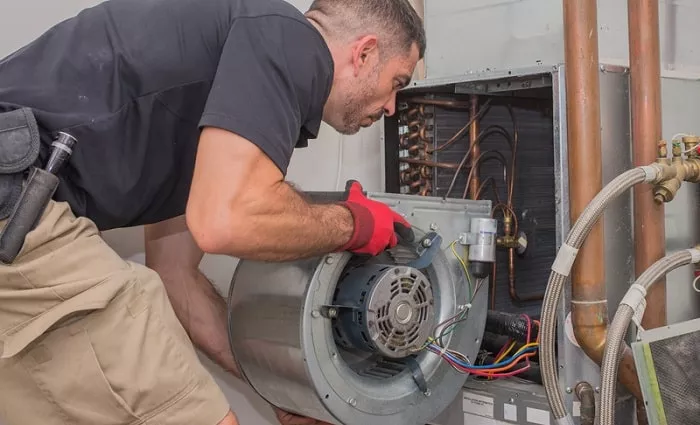
A furnace can generate plenty of heat, but that heat is of little use if the blower motor cannot move warm air through the ductwork. The blower motor is responsible for circulating conditioned air throughout the home, and problems with this component can result in weak airflow, unusual noises, overheating, or a furnace that repeatedly shuts down.
Contents
ToggleFor Orange County homeowners, understanding the warning signs of blower motor trouble can make it easier to recognize problems early and know when professional service is necessary. This guide explains common blower motor problems, possible causes, basic troubleshooting steps, repair options, and ways to prevent future failures.
What Does a Furnace Blower Motor Do?
The blower motor powers the fan inside the furnace. During a heating cycle, it pushes air across the furnace’s heat exchanger and sends the warmed air through the home’s ductwork and supply registers. The same blower assembly can also circulate air during cooling operation in many central HVAC systems.
Because the blower is responsible for maintaining airflow, a malfunction can affect both comfort and furnace operation. If airflow becomes severely restricted, the furnace may overheat and activate its safety controls.
Common Signs of a Failing Blower Motor
Several symptoms can indicate that the blower motor or another component in the blower assembly needs attention.
Weak Airflow
If air coming from the registers feels considerably weaker than usual, the blower motor could be struggling. However, weak airflow does not automatically mean the motor has failed. A dirty filter, blocked duct, dirty blower wheel, or other airflow restriction can create similar symptoms.
Replacing a severely clogged filter and making sure supply and return vents are unobstructed are reasonable first checks. If airflow remains poor, a technician can determine whether the motor is operating at the appropriate speed.
No Air Coming From the Vents
A furnace may ignite while producing little or no airflow. Possible causes include a failed blower motor, defective capacitor, electrical problem, control-board issue, or obstruction in the blower assembly.
Because several different problems can produce the same symptom, replacing the motor without proper testing can result in an unnecessary repair.
Strange Blower Noises
Grinding, squealing, rattling, or persistent humming should not be ignored. Worn bearings, loose components, blower-wheel problems, or electrical components can cause unusual sounds.
A grinding or squealing sound that becomes worse as the furnace operates may indicate mechanical wear and deserves prompt inspection.
The Motor Hums but Does Not Start
A humming motor that fails to turn can sometimes indicate a faulty run capacitor on systems that use PSC motors. The capacitor helps the motor start and operate correctly. A technician can test the capacitor and determine whether it is within its specified range.
The motor itself could also be damaged or seized, so the symptom should be diagnosed rather than automatically attributed to the capacitor.
Furnace Frequently Shuts Down
A blower that does not provide adequate airflow can contribute to furnace overheating. The furnace’s limit control can shut the burners down when temperatures become excessive, which may lead to repeated heating cycles.
This makes airflow problems important to address promptly. A dirty filter, restricted ductwork, dirty blower wheel, or failing motor can all contribute to inadequate airflow.
Common Causes of Blower Motor Problems
Dirty Air Filters
A heavily clogged filter restricts airflow and makes the HVAC system work harder. Over time, restricted airflow can contribute to overheating and additional stress on system components.
Homeowners should check their filter regularly and replace it according to the manufacturer’s recommendations and the conditions inside the home.
Dust and Debris
Dust can accumulate around the blower compartment and wheel. Significant buildup can interfere with proper airflow and contribute to inefficient operation. Keeping the HVAC system maintained helps reduce the likelihood of excessive accumulation.
Worn Motor Bearings
Motor bearings can wear with age and repeated operation. Bearing problems may produce squealing, grinding, vibration, or other unusual sounds. Once a motor has significant internal mechanical damage, replacement may be more practical than attempting to rebuild it.
Failed Capacitor
Traditional PSC blower motors commonly use capacitors. A weak or failed capacitor can cause slow starting, humming, intermittent operation, or failure to start.
Because capacitors can retain an electrical charge, testing or replacing one should be handled carefully by someone qualified to work with HVAC electrical components.
Electrical or Control Problems
A blower motor may appear to have failed when the actual problem involves wiring, a relay, a control board, or the power supply. Repeated circuit-breaker trips can also indicate an electrical fault that should be professionally diagnosed.
PSC and ECM Blower Motors
Residential furnaces can use different blower technologies. Older and simpler systems commonly use permanent split capacitor (PSC) motors, while many newer systems use electronically commutated motors (ECMs), including variable-speed designs.
The difference matters when diagnosing and repairing a system. A PSC system may have a separate capacitor that can fail, while an ECM system may involve an electronic control module and more specialized diagnostics.
For this reason, homeowners should avoid assuming that every blower motor problem requires the same repair.
Safe Troubleshooting Steps for Homeowners
There are a few basic checks homeowners can perform without disassembling electrical components.
First, check whether the thermostat is set correctly and calling for heat. Next, inspect the furnace filter and replace it if it is visibly dirty or overdue for replacement. Make sure supply registers and return-air grilles are not blocked by furniture or other objects.
You can also listen for unusual sounds when the system starts. Pay attention to whether the blower starts normally, produces only a hum, makes grinding noises, or fails to operate entirely.
If you need to inspect the furnace cabinet, turn off power to the equipment first and do not touch capacitors, wiring, or other electrical components. Furnace blower repairs involve electrical hazards, and manufacturers recommend professional assistance for complex motor work.
When Professional Repair Is Necessary
Professional service is appropriate when the blower motor does not start after basic homeowner checks, repeatedly trips a breaker, produces burning smells, makes severe mechanical noises, or causes the furnace to shut down repeatedly.
A qualified HVAC technician can test the motor, capacitor, electrical connections, control components, and airflow. They can also determine whether the motor itself needs replacement or whether a smaller component is responsible for the problem.
For homeowners looking for furnace repair Orange County, choosing a qualified technician is particularly important when electrical testing, motor replacement, or other internal furnace work is required.
Repair or Replace the Blower Motor?
Not every blower problem requires a complete motor replacement. A technician may discover that the actual problem is a capacitor, wiring connection, control component, dirty blower wheel, or airflow restriction.
If the motor has damaged bearings, burned windings, severe electrical problems, or other internal failures, replacement may be necessary. The replacement motor must be compatible with the furnace’s electrical specifications, blower assembly, controls, and required airflow.
Modern ECM systems can also require more specialized replacement procedures than conventional PSC motors.
How Orange County Homeowners Can Prevent Blower Problems
Regular maintenance can reduce the likelihood of unexpected blower problems. Homeowners should keep filters clean, maintain unobstructed return and supply airflow, and arrange periodic professional HVAC inspections.
During maintenance, a technician can inspect the blower assembly, electrical connections, motor operation, airflow, and other furnace components. Identifying unusual noise, vibration, overheating, or declining airflow early can help prevent a minor issue from developing into a larger breakdown.
Final Thoughts
The furnace blower motor plays a central role in delivering heated air throughout the home. Weak airflow, unusual noises, a humming motor, repeated furnace shutdowns, and complete loss of airflow can all indicate a problem with the blower system.
Some issues are caused by relatively simple problems such as a dirty filter or failed capacitor, while others require motor replacement or electrical repair. Proper diagnosis is therefore important before deciding what needs to be repaired.
For Orange County homeowners, regular maintenance and prompt attention to warning signs can help keep the heating system operating safely and reliably throughout the cooler months.
